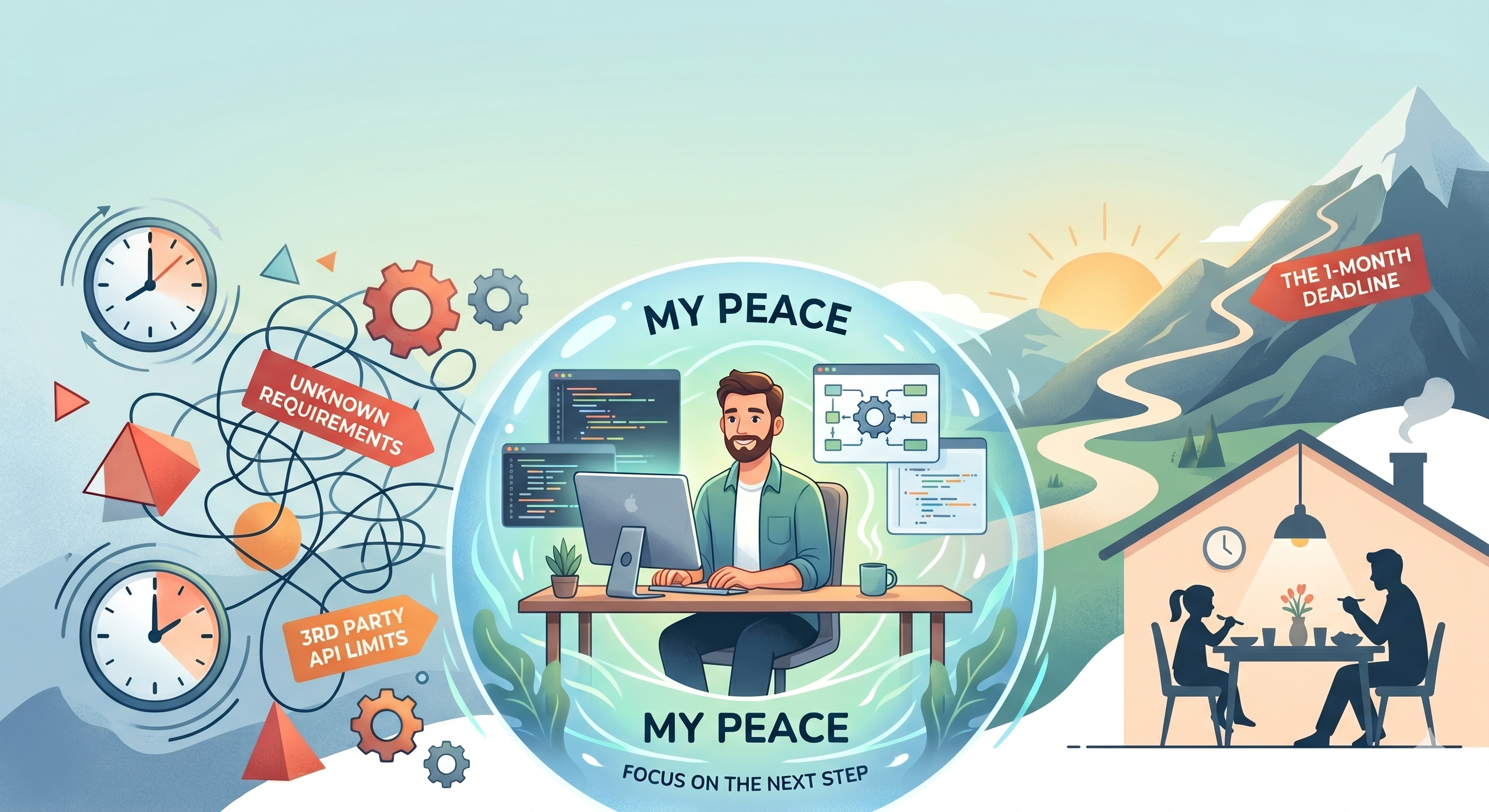
In software engineering, there is often a tension between the reality of discovery and the rigidity of a roadmap. We are frequently handed a destination and an arrival time before we’ve even had a chance to check the engine.
Right now, my team is in the thick of a significant integration with a complex third-party platform. The technical requirements are heavy: our APIs need to interact with theirs, and we need to upload all our sponsored campaigns to their platform to begin experimentation.
The deadline? We’ve been given one month to fully figure out the integration and go live.
In many environments, this is where the panic sets in. The natural reaction is to look at that four-week window, compare it to the mountain of unknowns, and feel paralysed. But I’ve learned that taking that stress on doesn’t make the software build faster.
Instead, I focus on protecting my peace. Here is how I balance the need for delivery with my own well-being.
Converting Paralysis into Excitement
If I woke up every morning fixating on the sheer volume of work required to hit that one-month target, I wouldn’t want to get out of bed. Staring at the whole mountain at once is paralysing.
I want to wake up excited to plough on with the tasks ahead. To do that, I have to mentally detach myself from the pressure of the timeline and focus entirely on the engineering puzzle right in front of me.
My attitude is: What is the most interesting and important thing I can solve today?
- If we need to authenticate the API, I focus on that.
- If the data upload fails, I debug that.
- If a requirement changes, I pivot.
By zooming in on the immediate “next step,” the work remains engaging. I get the satisfaction of solving problems and making tangible progress every day, rather than feeling crushed by what is left to do.
The Reality of “Discovery as We Go”
The fundamental reason I don’t worry about the timeline is that software integration is rarely a straight line; it is a process of discovery.
In this specific project, the uncertainty isn’t just coming from the code—it’s coming from the requirements. Our Product team aren’t 100% sure what the third party is capable of. They are essentially making guesses about how the integration will work and relying on us, the developers, to figure out the reality as we go.
It creates a strange contrast: the frontend designs we’ve been given are fairly well considered and polished. However, there are little to no actual product requirements from a technical backend point of view. This gap points to a serious lack of knowledge in the business around how the backend works and how complex it is to interact with external APIs.
We are finding things out as we go. We are discovering that the vendor’s platform doesn’t always behave as promised, and we are uncovering limitations that the Product team simply assumed wouldn’t exist.
If I were to hold myself accountable to a deadline based on guesses rather than technical facts, I would be setting myself up for burnout.
Communication Over Internalised Stress
I understand the value of estimates. Businesses need timelines to coordinate marketing, sales, and strategy. I am not ignoring the deadline; I am just refusing to let it ruin my mood.
My approach isn’t to say “it’s done when it’s done” in a dismissive way, but rather to be transparent about the reality of the work.
Instead of internalising the stress of these delays, I focus on communicating progress and work outstanding.
I don’t get bogged down needing to make decisions for things we don’t have the full picture of yet. If a stakeholder asks if a feature is feasible by Friday, and I haven’t explored that area yet, I don’t panic or over-promise. I simply say, “I don’t know yet, but I will update you as soon as we get to that layer of the discovery.”
This allows me to be a professional partner to the business—giving them the data they need—without acting as a sponge for anxiety.
Why I Need to Switch Off
There is a personal reason why this boundary is non-negotiable for me: I have a young family.
If I spend my workday stressing about “insane” internal timelines, I carry that energy home. I don’t want to be physically present at the dinner table but mentally stuck debugging an API integration or worrying about a launch date.
By focusing on pragmatic progress rather than artificial pressure, I can close my laptop at the end of the day and truly switch off. I can enjoy spending time with my family without a cloud of looming deadlines hanging over me.
The Pragmatic Professional
Ultimately, I believe this mindset leads to better code. Rushing causes mistakes; panic causes burnout.
I take a pragmatic view of what has been done, I assess what needs doing, and I continue moving forward. I work hard, I communicate clearly, and I protect my peace. That is the only way to ensure I’m still enjoying this job—and my life—when the project is finally live.